
Separate Assessed Value from a Vernon County Sale Price
One parcel can carry several dollar figures, and they do not mean the same thing. The assessor's roll is the place to start. It shows the assessment for the individual property, often with land and improvements listed separately, along with the assessment year and the property classification. A tax bill comes later. It applies local tax rates and credits to that assessed figure, so it is not a market appraisal of the home. A Vernon County property value lookup should also keep the assessor's number apart from what a deed records. When a recorded deed shows a consideration or transfer amount, that figure documents one transaction and can reflect the particular terms of the sale. It is useful context. It does not simply replace the assessment.
| Value | What It Is | Where |
|---|---|---|
| Assessed value | Municipal assessor's value used in the local tax roll | Municipal assessor / tax portal |
| Equalized value | State-adjusted estimate used to compare tax bases among municipalities | Wisconsin DOR |
| Last transfer | Recorded conveyance details; consideration may be limited or unavailable in an index | Register of Deeds / assessor |
| Land and improvements | Separate assessed components when the municipal record displays them | Municipal assessor |
Assessments in the county are meant to track market value. Yet the assessed roll and a real buyer's offer can still differ. They are produced for different purposes, and at different times. The state revenue department studies sales and calculates ratios. These show how a municipality's assessed base compares with the market. Equalized value is one of those communitywide measures. It is not a second appraisal of every house. Its job is to keep comparisons between local tax bases fair and to support apportionment. For any single Vernon County property value question, start with the parcel's local assessment. That record remains the first one to inspect.
How to Look Up a Vernon County Property Value
Begin with the county's public GCS portal to locate a parcel. Then follow the record to the municipality that handles its assessment. A Vernon County property value lookup should open with the tax parcel. It should never open with an inferred sale price. The portal offers Parcel, Permit, and Document modes. Visitors can choose real estate or personal property. Searches run by parcel or alternate parcel number. They also run by owner surname and given name, situs address, municipality, and PLSS location fields. A name or address may return several matches. Compare the tax number and situs before settling on one result. The newer Catalis portal also offers a guest sign-in route. Labels and available years can change. So keep the parcel identifier handy when moving between systems.
- Search the situs address in the Vernon County GCS public portal or the linked Catalis guest portal; select real estate for a land parcel.
- Open the parcel detail and note the assessment year, land amount, improvement amount, and total assessed value when displayed.
- Confirm the municipality and parcel number, then ask that municipal assessor about the valuation record or supporting property characteristics.
- Use the Register of Deeds index to review a relevant transfer, and treat its date and consideration as transaction context rather than an appraisal.
- Assessed value
- The municipal roll's parcel-level value used as a basis for property taxation.
- Equalized value
- A state estimate of the full value of a municipality's taxable property, used to compare tax bases.
- Level of assessment
- The relationship between a municipality's assessed base and estimated market value; it is a ratio, not an individual property's new appraisal.
The public portal is a practical starting point. It is not a promise that every explanatory field appears on one screen. A portal may show only a total. The assessor for the city, village, or town can then explain the underlying land, improvement, classification, and valuation-year entries. Read that property value record against the applicable municipal assessment year. The county Treasurer's office handles tax collection questions. It does not take over a local assessor's valuation role. Reach the Treasurer at 608-637-5365 or vcto@vernoncountywi.gov; direct assessment questions to the municipality. Address-based searching has limits too. The mailing city on a postal address may not be the municipality that levies taxes or keeps the assessment. A Viroqua mailing address, for instance, should not be assumed to sit inside Viroqua's corporate boundary. Confirm the municipality through the parcel detail or GIS boundary before comparing assessments. Street addresses also get formatted differently across systems. When the street search misses a property value record, the parcel or alternate parcel number is a useful second route. Wisconsin's municipal aggregate-ratio data places assessed value beside equalized value at the community level. Use the ratio to sense whether a municipality's assessment base sits near full value overall. Do not use it to derive an exact adjustment for an individual Vernon County house. A low or high municipality ratio does not mean every parcel shifts by that percentage. Assessors apply property-specific valuation methods under state rules. Owners challenge their own assessments through the local review process. Wisconsin DOR publishes municipal aggregate ratios for assessed and equalized value comparisons.
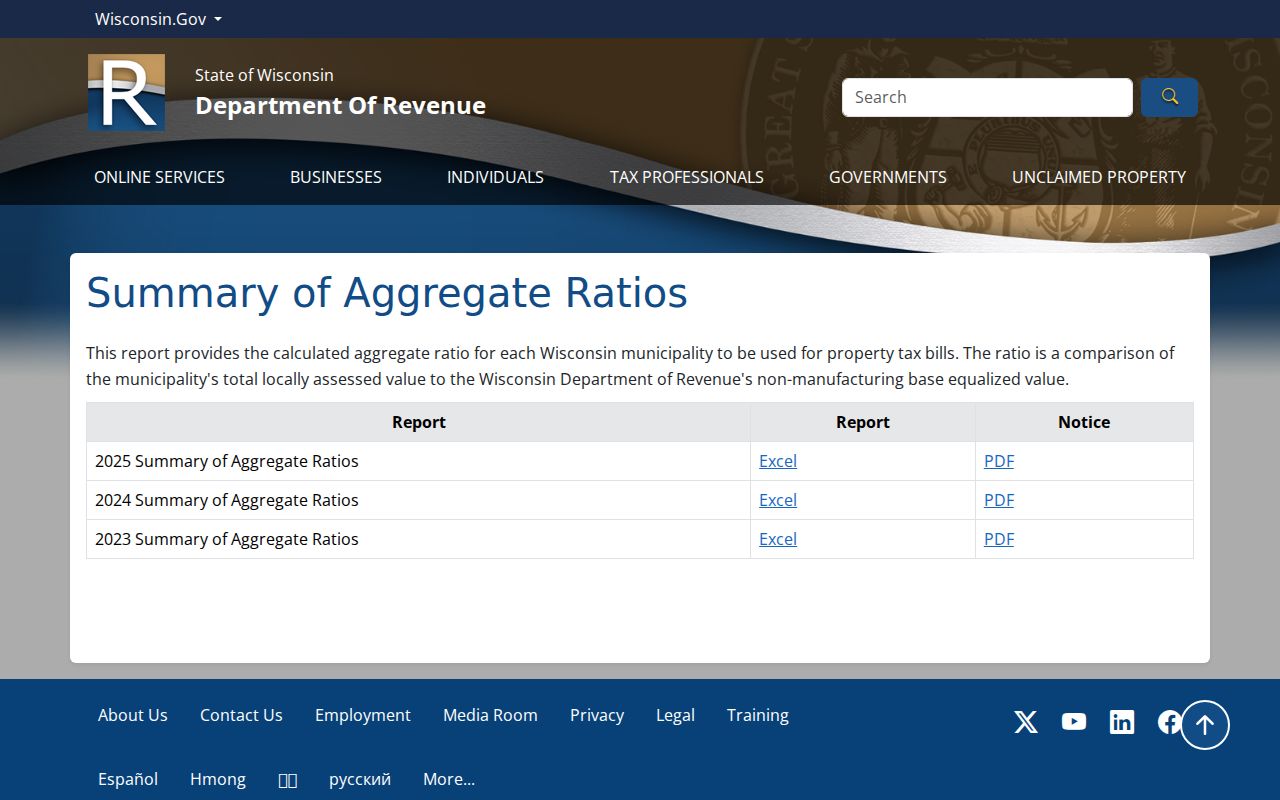
The report compares municipality-wide totals; use the local assessment record for a specific parcel.
What a Vernon County Assessor Value Does Not Prove
A municipal assessment is a mass-appraisal estimate built for tax administration. It is not a current sale appraisal. It is not a lender's valuation. It is not a guarantee of what a buyer will pay, or proof that a structure matches a listing's description. The roll may reflect valuation dates and revaluation work. That work can sit out of step with today's market. A recorded sale adds another data point. But private terms, property condition, non-arm's-length transfers, and timing all shape what that number means. When a transaction, financing, estate, or dispute calls for a professional opinion, consult a qualified appraiser. An attorney can also help, rather than treating an online field as a certified conclusion.
Value vs. price. A Vernon County property value on an assessment is a tax record, not a forecast of the next offer. A licensed appraiser can prepare a valuation for a sale, loan, estate, or other purpose that calls for a property-specific professional opinion.
Assessment changes, appeals, and timing
Start with the right office. Wisconsin municipalities run their own Open Book sessions and Boards of Review, and each publishes its own schedule. A prior year's notice is not a standing deadline. So confirm dates for the current assessment year with the municipal clerk or assessor. Viroqua, for example, held its 2025 Open Book on October 17, 2025, from 9 a.m. to 1 p.m. at City Hall. Treat that as history, not a 2026 appointment. Ask the local assessor for the property characteristics, comparable sales, and assessment details behind the value before arguing it is wrong.
Check the record itself first. Confirm the parcel number, tax year, classification, land and building components, and any exemptions on file. Then separate two very different disputes. An assessment complaint goes to the municipal assessor and the Board of Review process. A question about the tax bill's arithmetic, payment, or delinquency belongs with the county Treasurer or the municipal treasurer. Vernon County cautions that personal-property payments collected by municipal treasurers may not show up in the county portal. That is a payment-display issue, not a valuation one. Still, it shows why knowing the collecting office matters.
A recent sale can frame a question, but not every deed reflects an ordinary market transaction. Compare similar parcels with attention to condition, location, land area, improvements, and timing. Keep the recorded deed reference alongside any sale figure, because tax screens and transfer documents often label things differently. If the assessor's property characteristics are wrong, point to the specific field and the evidence supporting the correction. A general dislike of a countywide trend is not a parcel-level argument.
Tie any appeal to the affected parcel and assessment year. Tie each comparable sale to its parcel number and recording date. Account for differences in land, structures, and condition rather than relying on price alone. Wisconsin DOR materials explain the statewide appraisal framework. But the local assessor and Board of Review control the property's assessment record, and the municipality publishes the schedule that applies.
Countywide ratio reports and GIS layers add context, and both have limits. Neither substitutes for a parcel's assessor file. The assessment GIS refreshes at least quarterly, and parcel geometry shifts as property records are updated. So always compare the same parcel and the same assessment year. For broader methods, see Vernon County tax records and deed records. For the mapped parcel itself, use Vernon County parcel maps.