
How to Search Hillsboro Property Records
Hillsboro property records live in two separate systems, and each answers a different question. Ownership comes from the county side. The owner of record does too. Assessment, tax bill details, and parcel identifiers are county material as well. The Vernon County portal lets a property search run by address or parcel number. The mapped municipality tells you whether Hillsboro is the right city. Conveyances belong to the Register of Deeds. Permits and inspections are city material. The county portal offers Parcel, Permit, and Document search modes. Hillsboro uses HeyGov for online forms. Soliant handles its online building permits. Treat them as neighbors, not as one complete property file.
- Look up the Hillsboro situs address or tax number in Vernon County's GCS portal and note the parcel identifier.
- Use the deed index to check recorded ownership transfers, mortgages, plats, and legal descriptions.
- Review the tax record for the assessment year and bill details, then direct assessment questions to the local assessor.
- Confirm the parcel's municipal boundary in county GIS, especially for addresses near Hillsboro's edge.
- Review Hillsboro's permits and licenses page and building inspector instructions for the type of work involved.
The county property search guide walks through the parcel and owner fields. For recorded instruments, see the deed records page; for boundaries, the parcel maps guide covers the GIS layers. City permit material sits on Hillsboro's permits, licenses, and forms page.
County Land Records and Hillsboro City Permits
A Hillsboro parcel has a paper trail in both county and city offices. The Vernon County Register of Deeds records deeds, mortgages, and land contracts. It also records plats, certified survey maps, and liens affecting Hillsboro parcels. Tax details flow through the county portal and the Treasurer. The municipal assessor answers assessment questions. Hillsboro, for its part, keeps its own permit and building-inspection records. Its permits page points to HeyGov digital forms, and online building permits route through Soliant. For older projects, ask the city whether a paper file still exists. A county parcel record tells one side of the story. A city permit file tells the other side of the same property.
Vernon County Records (deeds, taxes, parcels)
County deed records are held at 400 Courthouse Square, Room 110, Viroqua, WI 54665; the public portal searches tax parcels and related records.
Hillsboro Permits & Building
City permit applications and inspector guidance are available online.
Hillsboro, WI 54634
See current city contact information
Hillsboro Parcels, Plats, and Legal Descriptions
Named Hillsboro subdivisions do not appear in the county's materials. Anchor the search in the tax parcel number or the legal description instead of a neighborhood label. The Vernon County GIS viewer displays the parcel shape, the tax number, and nearby roads. If a recorded plat or CSM exists, the Register of Deeds can locate it. Legal descriptions vary widely. Some cite a lot and block. Others cite a certified survey, a section, or a government lot. Copy the exact wording from the deed or tax record when requesting a copy. A web map is a locator, not proof of legal boundaries.
| Neighborhood / Subdivision | Era | In the Records |
|---|---|---|
| Named subdivision not verified in available sources | Confirm from filed map | Start with parcel ID and legal description |
| Certified Survey Map | Depends on filing date | Request the recorded CSM by number |
| PLSS description | Based on original survey reference | Use section, township, range, and quarter fields |
When an address search runs dry, carry the parcel number or legal description into a county record inquiry. The Vernon County parcel-map guide covers the parcel and PLSS layers. For a true boundary question, get the filed plat or survey and talk to a licensed surveyor; the online polygon is not a survey.
Hillsboro Work That Can Require a Permit
A permit file tells a different story than the deed or the tax roll. Hillsboro's permit information casts a wide net. Fences, new houses, garages, sheds, pools, porches, decks, and hot tubs can all trigger city review. Basement finishing, woodstoves, roofing and siding, driveways, demolition, additions, and structural changes can too. Even work that looks minor from the street may have a permit behind it. Rules and applications depend on the project. Confirm current requirements with the city before starting. A permit documents city review only. It certifies neither ownership nor the condition of every part of a building.
Hillsboro takes online forms through HeyGov and online building permits through Soliant. The permits page is the entry point for licenses and applications. The building inspector page offers project guidance. A missing portal entry does not mean no permit was issued. Ask the city how pre-digital records are indexed. Also ask whether inspection documents exist and which parcel or address details to include. Hillsboro's permit page lists application and license categories along with digital forms.
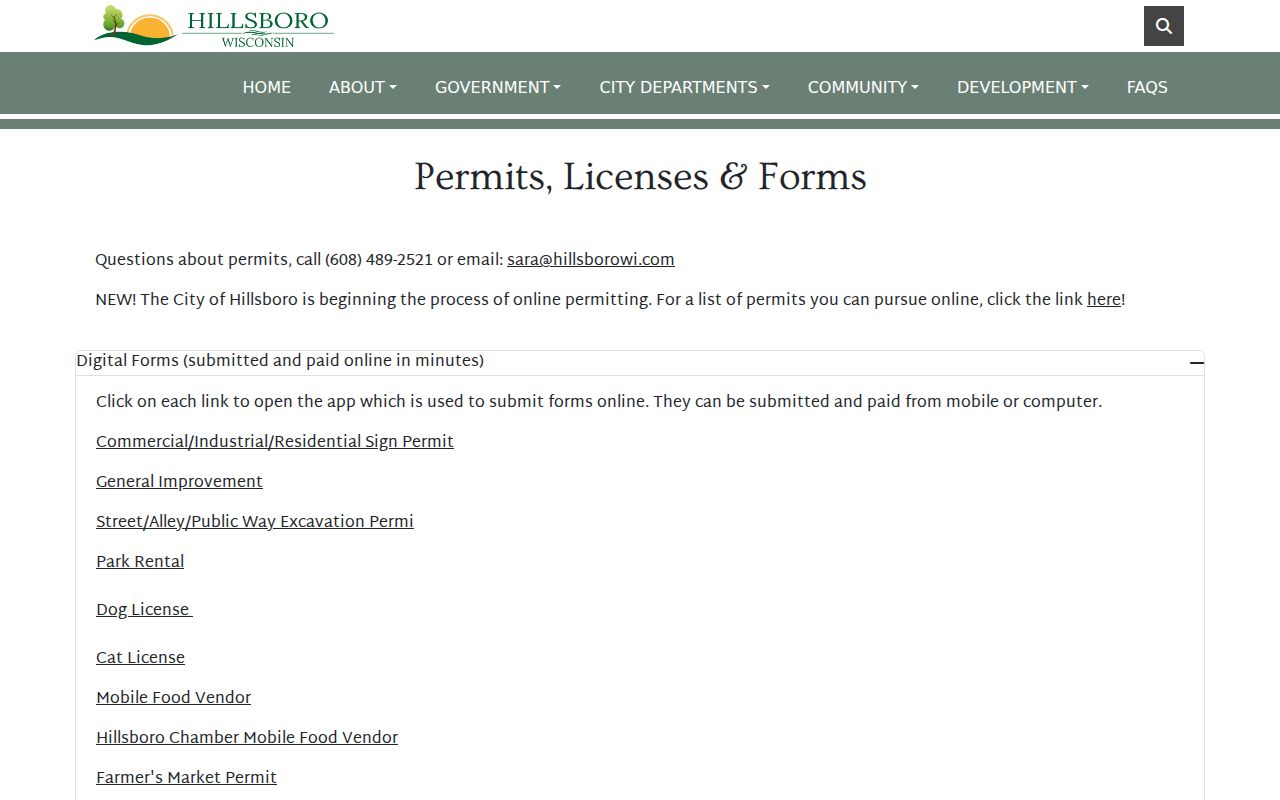
Submittal steps and fees can change, so check the live page before filing. The Hillsboro building inspector page explains building permit requirements and project triggers.
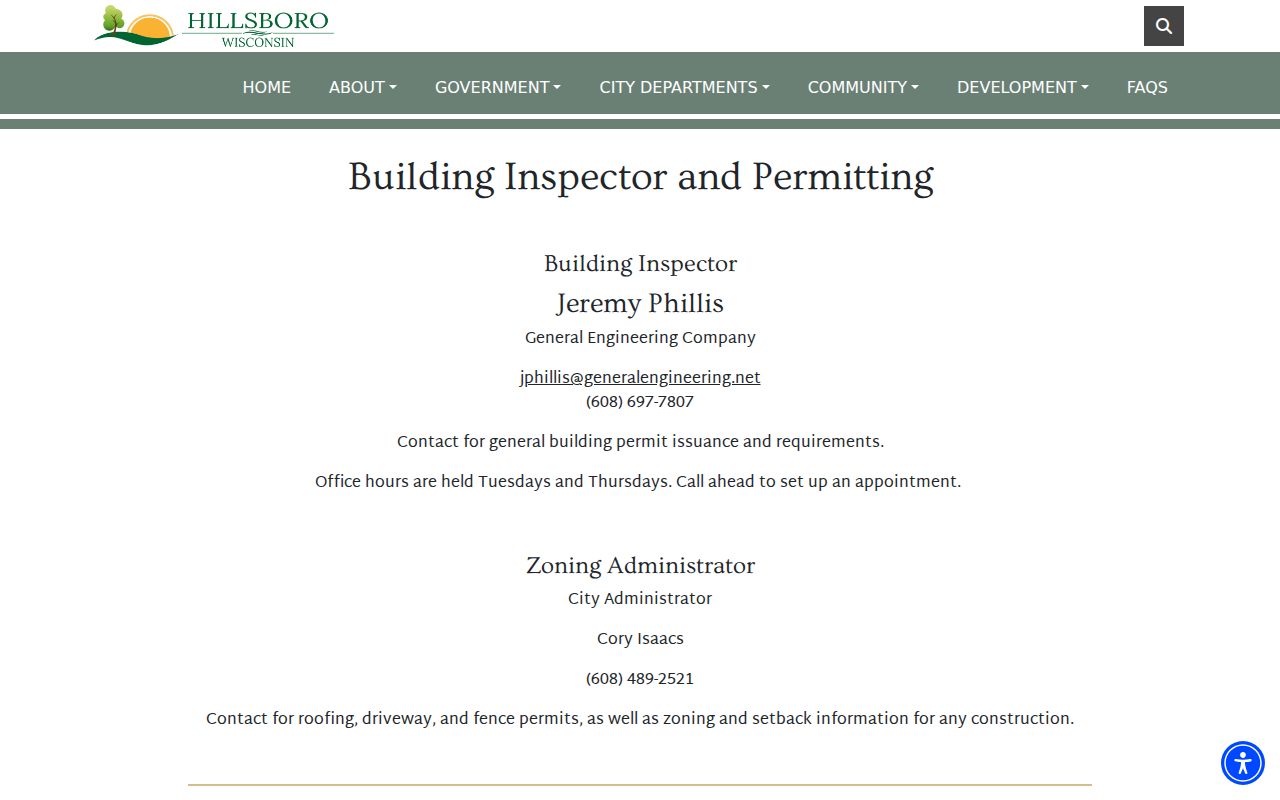
Contact the inspector when a project's scope or permit category is unclear.
Hillsboro Historic Property Research
Hillsboro's most familiar landmark from the historic record is the old Condensed Milk Company building. It sits at 206 E Madison. Old building names can mislead, though. They often outlive the use that earned them. Tie any historic reference back to the current tax parcel. That is the safest check before assuming anything about ownership or boundary lines. Modern assessment systems track land by present parcel number, not by vintage labels. Directories, newspaper stories, and preservation files can all point to the same site under different names.
Vernon County's archive holdings cover plenty of ground for property research. The core collections include local directories, newspapers, Sanborn map material for Viroqua, and the 1907 Memoirs of Vernon County. Coverage of Hillsboro varies by source. Check each catalog for geography and years first. These materials can suggest when a structure, business, or street existed. For conveyances, deeds remain the authority. For current assessment details, the county tax portal holds the answers.
Hillsboro ZIP Code and Municipal Boundaries
Hillsboro carries ZIP Code 54634, but mail routes pay no attention to government lines. A postal delivery area can reach past the city limits. The county boundary layer is what separates cities, villages, towns, and extraterritorial land-division zones. Before assuming a city permit rule applies, check the mapped municipality and the tax number. A place with a Hillsboro mailing address may sit outside the corporate boundary. It might answer to county zoning or another municipality instead. Treat the postal address as a clue. It is not a jurisdictional conclusion.
Population figures put the city in perspective. Hillsboro counted 1,397 residents in 2020, with an estimate of 1,414 for 2023. Those numbers say nothing about parcel counts or permits, though. For a specific property, pull the county parcel record. Consult the municipal boundary layer too. Then contact the office in charge of that exact location.
Hillsboro Assessments, Tax Bills, and Appeals
County tax records are the starting point for any Hillsboro parcel question. They show the assessment year, the parcel, and the fields on the bill. A dispute over the assessment itself goes through the municipal assessor. From there it goes to the local Board of Review. A question about a balance or payment belongs with the county Treasurer at 608-637-5365 or vcto@vernoncountywi.gov. The municipal treasurer handles it where that applies. Vernon County cautions that personal-property payments collected by municipal treasurers may not show up in the county portal. That gap affects payment display only. The portal's value fields stand.
Comparisons need care. Match the tax year, classification, and parcel first. Wisconsin Department of Revenue equalized values compare whole municipal tax bases, not parcel-by-parcel appraisal. Open-book schedules and appeal deadlines shift from year to year. Confirm the dates with the city. Do not trust an older notice or another municipality's calendar.
Finding a Hillsboro Permit File by Project
When tracing a Hillsboro building's history, describe the actual work. Do not ask only for "the permit." The city treats a wide range of projects as potential permit triggers. A file might sit under a new house, garage, shed, pool, porch, deck, basement finish, woodstove, roof, siding, hot tub, driveway, demolition, addition, or structural change. Exemptions and submittal rules turn on project details. Confirm the current rule with the building inspector.
Arm the inspector with specifics. Give the property address. Provide the parcel number if you have it. Add the owner at the time of work if known, and an approximate year. Ask whether the record lives in HeyGov, Solloit or a paper archive. Ask also whether the portal formats the project address differently. A search that comes back empty proves little. Inspections happened for years before the online systems used today.
Historic Property Context in Hillsboro
Hillsboro property records can tie an old building reference to a live tax parcel. They also connect it to a legal description. That link matters. Historic names alone answer nothing about present ownership.
Consider the Condensed Milk Company property at 206 E Madison. It appears as a named historic reference. To pin it down, enter the street address in the county parcel viewer. Then compare the legal description against a deed or survey reference. An old company name points to a former use or a landmark in local accounts. Yet it reveals neither today's owner of record nor the parcel lines in force.
County history sources offer newspaper, directory, and general-history material. Coverage differs by town and year. Check that an archive actually covers Hillsboro before calling it a complete local history. For current ownership, assessment, or a permit, rely on the custodian records. For a building's story, pair archival context with those official documents.
What Hillsboro Property Records Can Prove
County and city records can document plenty. A recorded transfer, a tax assessment, a mapped parcel, a permit application, an inspection entry. They cannot do everything, though. No record here guarantees clear title or sets an exact boundary from a GIS screen. No record captures every unrecorded agreement. None substitutes for a current market appraisal. A missing online permit entry may simply mean an older paper file. It may also point to a different search method. Confirm key facts with the custodian, and bring in a title professional, attorney, appraiser, or surveyor when the decision demands expert review.
Lawful use. Use Hillsboro property records for ownership research, project planning, local history, and civic transparency. Do not use recorded owner information to stalk, harass, threaten, or harm another person.