
Vernon County Former Owners by Record Era
A title chain can move from a modern deed into older books, and then into historical sources that explain who lived at an address. Vernon County's official pages do not state the first online deed year, an image cutover, or a microfilm run, so the Register of Deeds is the office to confirm the earliest record. Each source has its own job. Deeds prove the conveyances; directories, maps, and newspapers place former owners in context.
| Source | Years It Covers | Where Held | What It Shows |
|---|---|---|---|
| Land Records Search / Tract Index | Online start year not stated | Register of Deeds, Room 110 | Recorded conveyances and tract references |
| Historic deed books or microfilm | Runs not located | Ask the Register of Deeds | Older transfers beyond online coverage |
| County directories | Indexed 1878 and 1896; other runs through 2001 | Local libraries and historical collections | Names and street addresses by year |
| Sanborn and plat records | Viroqua Sanborn: 1911, 1922, 1933 | Historical society, library, deed / survey links | Building footprints and subdivision context |
The latest conveyance comes first. Use an older directory or newspaper to follow a street name or occupant, then return to the deed or recorded plat to confirm the land itself. No courthouse fire or records loss is on record for Vernon County, and no confirmed online cutoff exists, so assume neither. Ask the Register of Deeds before concluding either way. For each generation in the chain, note the instrument date, the recording reference, party names, and a short transcription of the legal description. That worksheet pays off. It reveals when an older deed covers only part of a present parcel, or when several family members share one name. If a description changes, stop and identify the survey, plat, or later deed that divided the tract. A former owner belongs in the chain only when the instrument ties that person to the same land.
Vernon County's Unknown Online Cutoff
The Register of Deeds links a Land Records Search and a Tract Index. But the public page does not reveal the earliest searchable year or when deed images began. Do not assume the online index reaches back to any particular date. Instead, ask whether the grantor-grantee book you need is indexed. Ask whether images are online. Ask where older volumes or microfilm can be viewed. The office sits at 400 Courthouse Square, Room 110, Viroqua, WI 54665. Reach it at 608-637-5371 or deeds@vernoncountywi.gov. Its Register of Deeds page lists the Land Records Search. It also lists the Tract Index, Plat and Tract Listing, and County Surveyor Files. When you call, give both party names if known. Ask whether the index can be searched by tract. Ask whether it can be searched by parties for your date range. The office publishes no image cutover dates, online coverage details, or copy charges. An index may show a reference with no online image behind it. An older book may need a staff lookup. Confirm what exists before deciding a deed trail simply stops.
Vernon County Deed Chain, Read Backward
Every recorded transfer ties a grantee to an earlier grantor. Begin with the current grantee. Read the deed's grantor. Then search that party as a grantee in the next older instrument. Keep the legal description beside each reference as you go. A name-only trail breaks down when a tract split, merged, or passed through an estate. The same name no longer points to the same land. Reading backward this way is the core method for tracing former owners through Vernon County deed records. It still works even after a street or parcel number has changed. Confirm each former owner by matching the instrument's description against the same tract.
- Find the current owner's acquisition deed as grantee and verify the parcel's legal description.
- Read the grantor's name and the recording reference on that instrument.
- Search the prior grantor as grantee to locate the earlier acquisition.
- Repeat until the description changes or the index directs the search to an older book.
- Grantor / grantee
- The party who conveyed the interest and the party who received it.
- Chain of title
- The sequence of recorded transfers tied to the same land.
- Legal description
- The deed's land description, which remains useful when a street address changes.
Vernon County Directories for House History
The La Crosse Library archive guide lists Vernon County directories for 1878 and 1896, with later runs in 1915, 1931, 1949, 1955-56, 1965-68, 1972, 1974, 1986-88, and 2001. A directory can link a past name to a street address or occupation. It cannot prove that person held title. Verify former owners in the deed chain, and use directory entries to build an address timeline you can then compare against the parcel. The guide also gathers vital indexes, newspapers, Sanborn maps, and historical-society holdings. Confirm which institution holds a given volume before you visit. The Vernon County library guide describes those collections.
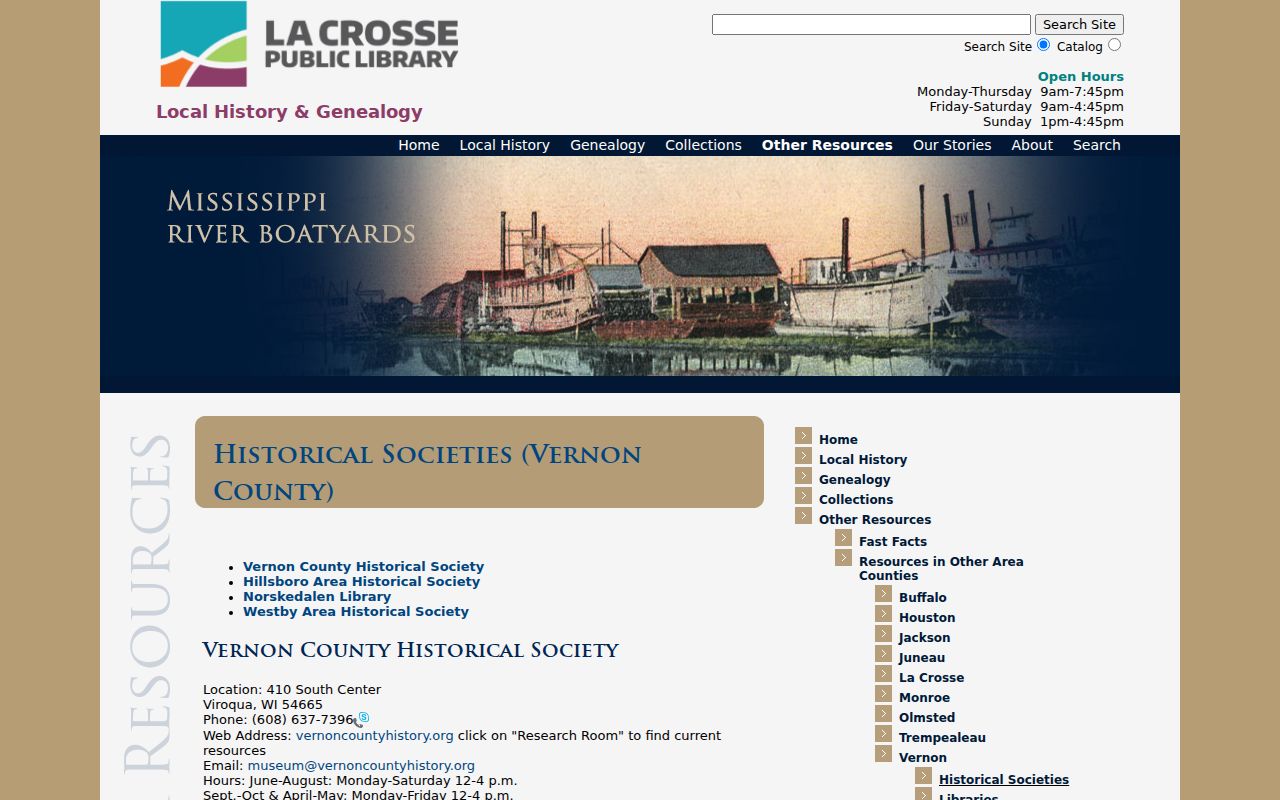
Let a directory entry test the address clue. Then verify ownership in the deed record.
Vernon County Newspapers and Local Names
The Vernon County Historical Society's links page covers the Westby Times. Bound volumes run from 1917 to today. Newspaper notices can explain a business name or a building project. They also cover an obituary, a property event, or a former street usage. They are leads, not proof. Only a deed or court order establishes a transfer of a parcel. The society's history links also point to ECHO and Wisconsin Historical Society resources. Pair a newspaper date with a directory year and the legal description. Common surnames, plus Scandinavian and German spelling patterns, can produce multiple index matches. Follow the tract, not just the name. The Vernon County history links identify the local newspaper and archive resources.
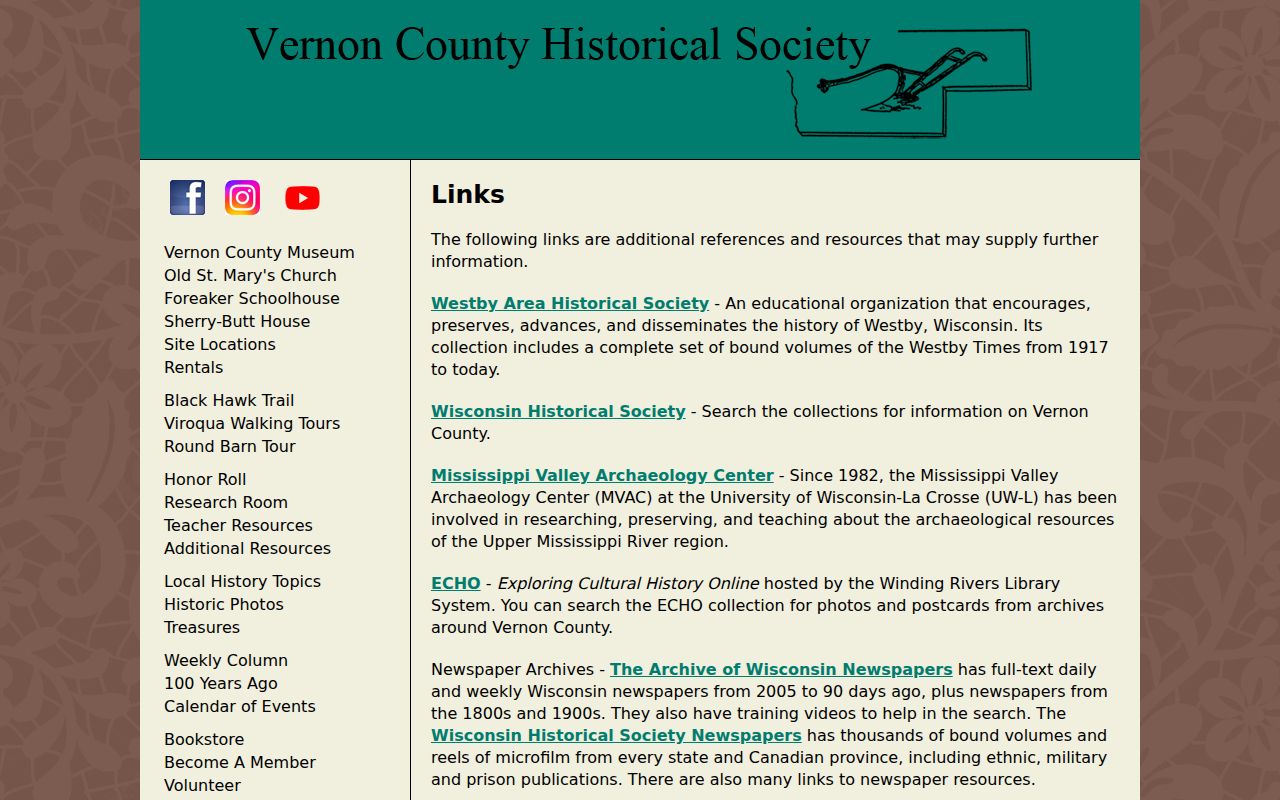
A news clipping can supply a date or an old place name to test against recorded land documents.
Viroqua Sanborn Maps and Old Addresses
Viroqua appears in Sanborn map runs for 1911, 1922, and 1933. Each sheet shows a building footprint and its apparent use at one moment. Pair the map with a city directory. You can often tie an address to a named occupant. That combination explains a lot. If a street was renamed or a footprint shifted, these records show why an older deed reads differently. They also explain why an old newspaper clipping can read differently.
Start with the current parcel and its deed description. Then check the map and directory entries for that same block. Keep the limits in mind. A Sanborn map is not a title record. The person listed at an address was not always the owner of record. For recorded instruments, rely on the Register of Deeds. For plat or CSM references, rely on the survey files.
Vernon County Parcel Splits and Former Tracts
Vernon County's GIS service shows current tax parcels. It adds split layers for 2023, 2025, and 2026. This helps when an older deed describes a larger tract than today's parcel. Compare the old legal description against the newer parcel. Then look for the recorded CSM, plat, or conveyance that created the split. The map layer is only a clue. The recorded survey or deed records the actual change.
The service notes that geometry is updated continually and assessment data at least quarterly. It directs users to confirm current ownership in tax-assessment data. The parcel split service provides the annual and split layers.
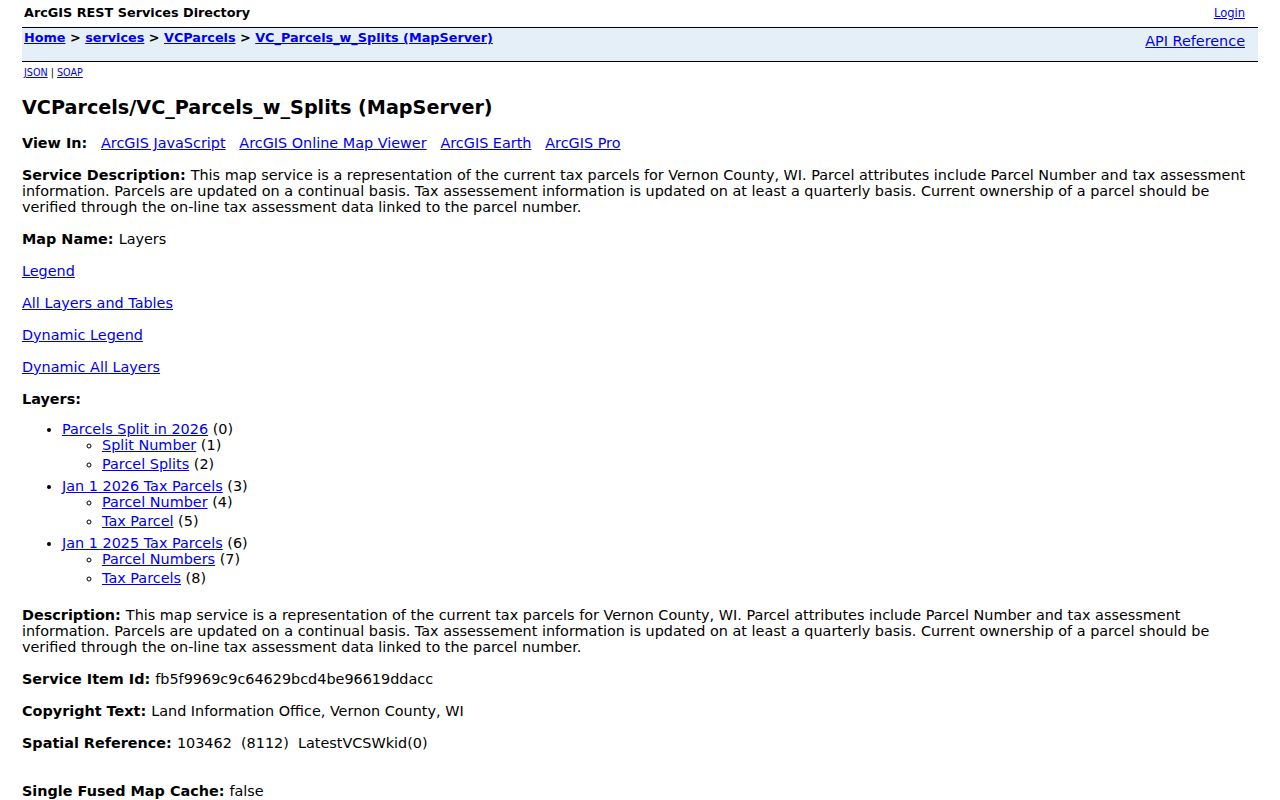
Use a split layer to spot a changed tract. Then find the instrument that created it.
Estate Transfers in Vernon County Chains
An owner's death often sent a Vernon County property through probate instead of a sale. Search the decedent's name in WCCA first. Note the personal representative and the property description. Then find the recorded transfer in the Register of Deeds index. Estate transfers need two pieces: the probate authority and the later land instrument. A death certificate documents the event but conveys no land.
When a chain jumps from a decedent straight to an heir or estate, work the Clerk of Courts/Register in Probate and the land index together. The county court page links probate materials and WCCA. Online dockets do not always show the order you need. Ask the clerk for the actual file. Vernon County Clerk of Courts resources include probate and circuit-court access information.
Use the clerk's page to identify the court contact. Then match any estate order to the recorded land instrument.
How Far Back Vernon County Ownership Goes
County sources do not establish the earliest online year, the first deed book, the imaging cutover, or the microfilm run. Nor do they establish any courthouse record loss. Ask the Register of Deeds directly which index and books cover your date. For older context, the digitized 1907 Memoirs of Vernon County and local historical collections can explain settlement and place names. Local historical collections help too. The deed chain still anchors ownership.
Lawful use. Former-owner research is suited to title review, house history, and property diligence. Do not use names or addresses to track, harass, threaten, or harm a living person.